Why my fitness results are stalled is one of the most common questions adults ask once workouts stop delivering visible change.
The frustration is real—and understandable.
You’re showing up.
You’re trying.
You might even be training harder than ever.
Yet:
✅ Strength numbers won’t move
✅ Fat loss has slowed or stopped
✅ Energy feels inconsistent
✅ Recovery feels worse, not better
This doesn’t mean fitness “doesn’t work anymore.”
It means the rules changed—and your strategy didn’t.
This article is part of the Fat Loss After 40 Recovery Framework.
When Results Stall, Most People Do the Wrong Thing
When progress slows, the instinctive response is predictable:
🔹 Add more workouts
🔹 Push closer to failure
🔹 Cut calories harder
🔹 Add cardio “to force fat loss”
That approach worked earlier in life.
After 40, it usually makes the stall worse.
Why?
Because effort is no longer the limiting factor.
Recovery is.
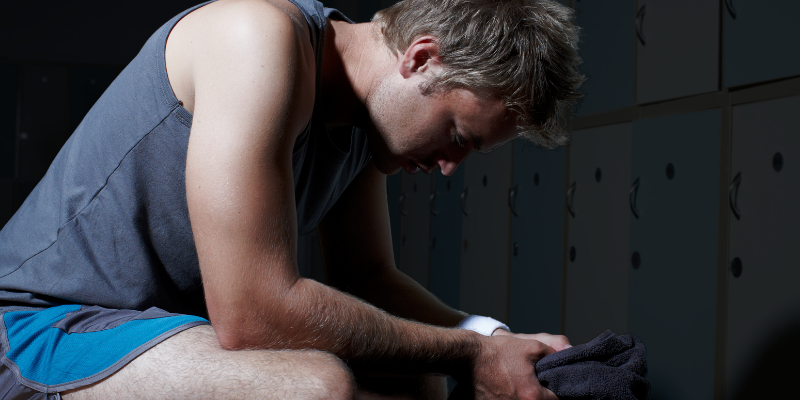
Why My Fitness Results are Stalled Even When I'm Consistent
Consistency alone doesn’t guarantee progress.
For adaptation to occur, this sequence must complete:
✅ Training stimulus
✅ Recovery
✅ Adaptation
After 40, recovery becomes conditional.
It depends on sleep quality, stress load, nutrition, and nervous system health.
When recovery cannot keep up with training stress, the body stops adapting—and results stall.
Beginners and Experienced Lifters Stall for the Same Reason
This isn’t just an advanced-lifter problem.
Beginners stall because:
🔹 They do too much too soon
🔹 Recovery is exceeded before consistency is built
🔹 Fatigue accumulates faster than fitness
Experienced trainees stall because:
🔹 They train like they did at 30
🔹 Volume stays high while recovery drops
🔹 Stress outside the gym is ignored
Different starting points.
Same bottleneck.
The Real Cause: Chronic Overreaching
Most people with stalled fitness results are not overtrained.
They’re chronically overreached.
That means:
🔹 Too many hard sessions
🔹 Not enough recovery
🔹 Stress stacking from life + training
🔹 No true recovery phases
The body adapts by conserving energy instead of building capacity.
This shows up as:
✅ Flat workouts
✅ Lingering soreness
✅ Poor sleep
✅ Loss of motivation
Not laziness.
Physiology.
The Nervous System Hits the Wall First
Muscles usually aren’t the first system to fail.
The nervous system is.
After 40:
🔹 Neural drive recovers more slowly
🔹 Power output drops under fatigue
🔹 Coordination degrades
That “flat” feeling?
That’s nervous system fatigue.
And you can’t outwork it.
Sleep Is the Silent Recovery Killer
After 40, sleep becomes more fragile.
It’s more affected by:
🔹 Stress
🔹 Alcohol
🔹 Late workouts
🔹 Blood sugar swings
🔹 Screen exposure
When sleep quality drops:
✅ Growth hormone pulses flatten
✅ Cortisol timing shifts
✅ Tissue repair slows
This is why workouts feel harder but results don’t show.
→ Sleep-driven recovery signaling is explained in growth hormone after 40
Why Deloads Don’t Fix Stalled Results
Deloads help only when baseline recovery capacity exists.
If:
🔹 Sleep is poor
🔹 Stress is high
🔹 Nutrition is inconsistent
A deload simply pauses damage.
Once training ramps back up, results stall again.
That’s not a programming issue—it’s a capacity issue.
Stress Outside the Gym Shrinks Progress
Training stress isn’t isolated.
After 40, recovery capacity is consumed by:
🔹 Work pressure
🔹 Family responsibilities
🔹 Financial stress
🔹 Irregular meals
🔹 Alcohol
🔹 Travel
Two people can follow the same program and get opposite results.
Same workouts.
Different recovery ceilings.
Cortisol Timing Explains a Lot of Stalled Results
Cortisol isn’t bad.
Chronically elevated or mis-timed cortisol is.
When stress stays high:
🔹 Recovery is suppressed
🔹 Fat loss becomes resistant
🔹 Sleep quality declines
→ This stress–recovery mismatch is covered in cortisol balance after 40
Why Fat Loss Stalls Before Strength
Fat loss is optional from the body’s perspective.
Survival is not.
When recovery is maxed out:
🔹 Energy conservation increases
🔹 Hunger rises
🔹 Spontaneous activity drops
🔹 Fat oxidation declines
This is why “eat less, train more” backfires after 40.
→ The metabolic side of this response is explained in insulin resistance after 40

Clear Signs Your Fitness Results Are Stalled for Recovery Reasons
If several of the following are true, your training load is exceeding your recovery capacity:
🔹 Sleep worsens as training increases
🔹 Soreness lasts longer each week
🔹 Performance fluctuates instead of improving
🔹 Motivation feels forced rather than natural
🔹 Fat loss stalls despite consistent effort
These are not signals to push harder.
They are signals that recovery is the bottleneck — and continuing to add stress will only deepen the stall.
How to Restart Progress When Results Are Stalled
You don’t restart progress by doing more.
You restart it by removing interference.
The After-40 Reset Strategy
🔹Reduce Training Frequency – 3–4 strength sessions max
🔹 Stop Living at Failure – Leave 1–3 reps in reserve
🔹 Increase Daily Walking – Improves circulation and recovery
🔹 Stabilize Protein Intake – Supports repair signaling
🔹 Match Training to Life Stress – Not ideal schedules
→ Foundational fueling is covered in over 40 fitness nutrition.
How to Restart Progress When Results Are Stalled
Supplements, labs, peptides, and advanced protocols:
🔹 Amplify a working system
🔹 Do not fix broken routines
If sleep, stress, and structure are off, tools underperform.
Research Supporting This Model
Chronic stress exposure shifts physiology toward energy conservation and reduced adaptation.
→ McEwen B.S. (1998). “Protective and damaging effects of stress mediators.” New England Journal of Medicine.
Sleep fragmentation reduces anabolic hormone secretion and impairs recovery signaling.
→ Van Cauter E., Leproult R., Plat L. (2000). “Age-related changes in slow wave sleep and REM sleep.” Journal of the American Medical Association.
Age-related anabolic resistance increases the recovery cost of training stress.
→ Deane C.S. et al. (2024). “Critical variables regulating age-related anabolic resistance.” Frontiers in Physiology.
Stuck Despite Training?
If your fitness results are stalled, the fix is rarely more effort. It’s usually recovery, structure, and sequence.
Why My Fitness Results Are Stalled – FAQ
why my fitness results are stalled, fitness results stalled, training but not seeing results, workout progress stalled after 40, recovery after 40, overtraining symptoms