At 40, a subtle shift begins for many adults—even those who eat clean, train hard, and take care of themselves. That’s exactly why thyroid optimization over 40 becomes such an important lever for long-term health.
Recovery slows. Fat loss becomes less responsive. Brain fog creeps in. Sleep becomes inconsistent. Energy dips in the late afternoon. Many chalk this up to aging, but in reality, one system often drives this entire chain reaction.
Why Thyroid Function Changes After 40—and Why It Matters Now More Than Ever
The thyroid is not simply a “metabolism gland.” It’s a master regulator of cellular energy, mitochondrial activity, body temperature, recovery speed, muscle protein synthesis, digestion, mental focus, and hormonal balance.
Yet, standard medical testing—TSH-only screening—misses the majority of functional thyroid issues, especially in adults over 40.
This article breaks down:
✅ How thyroid function changes with age
✅ Why TSH is not enough
✅ The labs that actually matter
✅ Clinical vs. real-life symptoms
✅ What improves thyroid conversion
✅ When medication makes sense
✅ How peptides, sleep, strength training, and nutrition amplify outcomes
This is your comprehensive guide to thyroid optimization over 40—written as both a scientific deep dive and a real-world manual.
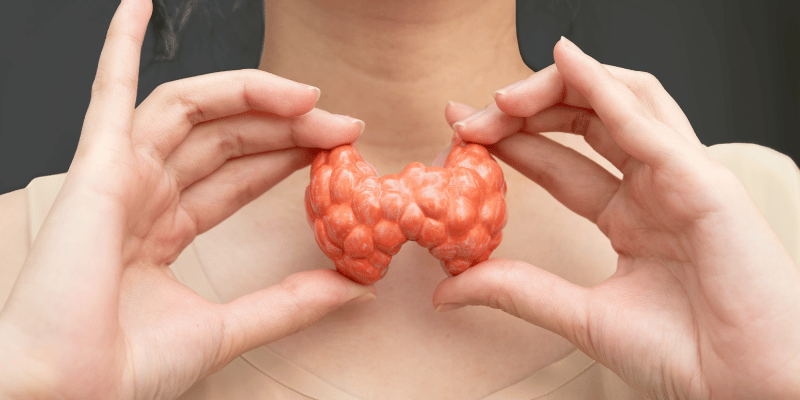
How Thyroid Hormones Actually Work
To understand why thyroid function suffers with age, we need to simplify what the thyroid actually does.
T4 = storage hormone
Produced by the thyroid; mostly inactive.
T3 = active hormone
Controls metabolism, energy, and cellular performance.
Reverse T3 = metabolic brake
A protective mechanism that slows metabolism under stress.
TSH = pituitary signaling
Not a thyroid hormone—just the brain’s “request.”
What Changes After 40?
As adults age, the body becomes less efficient at:
🔹 Converting T4 into T3
🔹 Clearing Reverse T3
🔹 Maintaining stable production during stress
🔹 Supporting mitochondrial ATP output
🔹 Regulating blood sugar and insulin—both major thyroid regulators
🔹 Restoring thyroid output after dieting or chronic training
Even small inefficiencies in these pathways create big real-life symptoms.
The Real-Life Symptoms Most Adults Mistake for “Getting Older”
Clinical thyroid dysfunction is obvious: high TSH, low Free T4, severely low Free T3.
But the functional decline—common after 40—is subtle.
Classic Symptoms That Signal You Need Thyroid Optimization Over 40
🔹 Weight loss resistance despite clean eating
🔹 Feeling cold or having cold hands/feet
🔹 Low or inconsistent energy
🔹 Slow recovery from workouts
🔹 Afternoon crashes
🔹 Brain fog or memory glitches
🔹 Low libido
🔹 Constipation or slow digestion
🔹 Hair thinning
🔹 Mood swings or anxiety
🔹 Needing more caffeine than before
🔹 Poor tolerance to dieting
These symptoms often overlap with:
✅ Low testosterone
✅ High cortisol
✅ Perimenopause
✅ Poor sleep
✅ Insulin resistance
👉 Read more about Low Testosterone After 40 here
Thyroid dysfunction rarely exists alone.
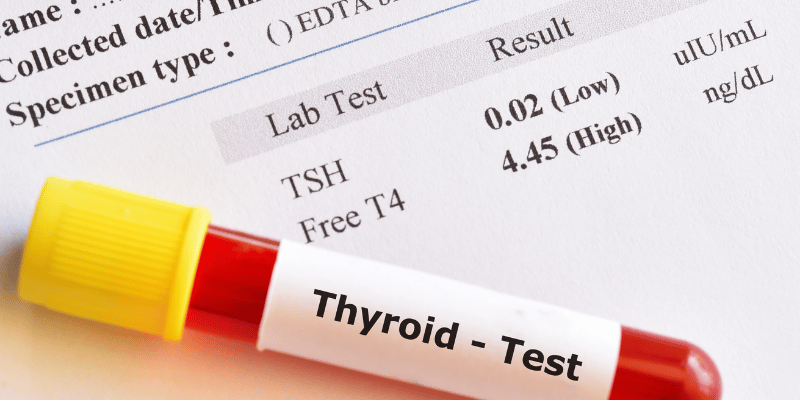
The Thyroid Panel You Actually Need (NOT just TSH)
TSH-only testing misses up to 60% of functional thyroid dysfunction in adults over 40, which is exactly why serious thyroid optimization over 40 always starts with a complete lab panel—not just a single marker.
Here is the complete thyroid panel every adult should get:
✔ TSH
Tells you how loud the brain is yelling at the thyroid.
Normal doesn’t mean optimal.
✔ Free T4
Shows thyroid output, not activation.
✔ Free T3
The hormone that actually drives metabolism, energy, and fat use.
✔ Thyroid Antibodies (TPO & TGab)
Blocks T3 at the receptor level—critical for adults with chronic stress.
✔ Ferritin + Iron Saturation
Required for T3 activation.
✔ Cortisol (AM/PM)
High cortisol = low conversion, high Reverse T3.
✔ Vitamin D, Zinc, Selenium, B12, Folate
All support thyroid pathways.
Optimal Over-40 Thyroid Ranges (Not the Lab’s Broad Reference Range)
Lab ranges are based on the general population—including people who are tired, inflamed, overweight, or metabolically ill.
Optimal functional ranges are dramatically tighter.
Thyroid Labs: Typical vs. Optimal Ranges After 40
| Marker | Typical Lab Range | Optimal Range Over 40 | Why It Matters |
|---|---|---|---|
| TSH | 0.4–4.5 | 0.8–2.0 | High-normal slows metabolism and energy. |
| Free T4 | 0.8–1.8 | 1.1–1.4 | Shows thyroid production capacity. |
| Free T3 | 2.0–4.4 | 3.2–3.8 | Controls metabolism, energy, mood, fat loss. |
| Reverse T3 | 8–25 | < 15 | High RT3 blocks T3 from doing its job. |
| TPO / TGab | < 35 | As low as possible | Early autoimmune detection. |
Comparison Table — Hypothyroid vs. “Low-Normal” Thyroid in Adults Over 40
Adults often get told their thyroid is “normal” when it is anything but.
Below is your comparison table.
Clinical Hypothyroid vs. Functional Low Thyroid in Adults Over 40
| Category | Clinical Hypothyroid | Functional Low Thyroid (Common Over 40) |
|---|---|---|
| TSH | High (> 4.5) | Normal |
| Free T4 | Low | Normal or low-normal |
| Free T3 | Low | Low-normal |
| Reverse T3 | May be normal | Often high |
| Symptoms | Obvious | Subtle but life-impacting |
Why Thyroid Conversion Declines After 40
This is the part most adults never hear from their provider.
1. Chronic Stress → High Cortisol → High Reverse T3
This shuts down conversion and blocks T3 receptors.
2. Low-Calorie / Low-Carb Dieting
Long-term dieting kills thyroid output.
3. Poor Sleep or Fragmented Sleep Cycles
Your thyroid axis resets overnight.
4. Low Micronutrients
Selenium, zinc, B2, B6, iron, iodine, vitamin D.
5. Gut Inflammation
70% of thyroid conversion happens at the gut-liver interface.
6. Aging Mitochondria
Mitochondria require T3 to generate energy—low T3 = low ATP.
👉 Read more on how to optimize your mitochondria with peptides
Strategies to Improve Thyroid Function Naturally
These strategies complement medication—but also help avoid it. In many cases, the most powerful thyroid optimization over 40 comes from stacking training, nutrition, sleep, and stress management in a smart, sustainable way.
1. Strength Training 3–4x Weekly
Improves metabolic rate, insulin sensitivity, and T3 responsiveness.
2. Walking 8,000–10,000 Steps Daily
Improves thyroid-hormone sensitivity in muscle tissue.
3. Systematic Carbohydrate Timing
Training days: moderate carb
Rest days: lower carb
This stabilizes thyroid output without harming insulin sensitivity.
4. Sauna + Red Light Therapy
Supports mitochondrial function and metabolic rate.
5. Stress Modulation (DSIP peptide, mindfulness, breathing)
Better cortisol rhythm → better thyroid conversion.
6. Micronutrient Support
🔹 Selenium 100–200 mcg
🔹 Zinc 15–30 mg
🔹 Vitamin D3 + K2
🔹 Iron if ferritin < 50
🔹 Iodine only if deficient
🔹 B12 + folate + B2 + B6
Peptide & Recovery Tools That Support Thyroid Optimization
When you’re thinking about thyroid optimization over 40, peptides are not magic bullets, but they can dramatically improve the environment your thyroid hormones are trying to work in.
MOTS-C
Improves mitochondria, glucose tolerance, and metabolic efficiency.
GHK-Cu
Anti-inflammatory, improves tissue repair, skin, hair, and cellular signaling.
CJC-1295 + Ipamorelin
Improves recovery and supports metabolic output indirectly.
DSIP (Sleep Peptide)
Regulates cortisol → essential for thyroid.
These should be used strategically alongside training, nutrition, and labs—not as standalone fixes.
👉 Read more about peptides for women and men over 40
When Thyroid Medication Makes Sense
Medication becomes reasonable when:
✅ Free T3 remains low
✅ Reverse T3 remains high
✅ Free T4 is low-normal
✅ Symptoms persist
✅ Cortisol is chronically elevated
✅ Diet, sleep, and training are optimized but progress stalls
Adults over 40 often respond best to:
🔹 T4/T3 combination therapy
🔹 Low-dose T3 for conversion issues
🔹 NDT (Natural Desiccated Thyroid) *what I take for myself!
Target is not “normal labs.”
Target is optimal function and symptom relief.
Real-Life Case Examples (Anonymous)
Case 1 — The Fit 45-Year-Old Woman Who Couldn’t Lose Weight
🔹TSH: 2.8
🔹Free T3: 2.6
🔹Reverse T3: 19
🔹Steps per day: ~5,000
Interventions:
🔹Added 15 minutes of walking after meals
🔹Introduced selenium + zinc
🔹Managed stress
🔹Reduced fasting duration
🔹Added structured carbs pre-training
Result:
Energy increased, digestion improved, fat started dropping again.
Case 2 — The 51-Year-Old Man with Afternoon Energy Crashes
🔹TSH: 1.9
🔹Free T3: 3.0
🔹Reverse T3: 20
🔹Cortisol: high in AM, low in PM
Interventions:
🔹Added DSIP 3–4x/week
🔹Focused on sleep consistency
🔹Added carbs at lunch
🔹Sauna 3x/week
Result:
Energy stabilized and performance improved.
Real-Life Case Examples (Anonymous)
🔹TSH: 2.8
🔹Free T3: 2.6
🔹Reverse T3: 19
🔹Steps per day: ~5,000
Interventions:
🔹Added 15 minutes of walking after meals
🔹Introduced selenium + zinc
🔹Managed stress
🔹Reduced fasting duration
🔹Added structured carbs pre-training
Result:
Energy increased, digestion improved, fat started dropping again.
Additional Research
👉 Thyroid Dysfunction in Peri-and Postmenopausal Women—Cumulative Risks
👉 Thyroid Function across the Lifespan: Do Age-Related Changes Matter?
👉Association of Thyroid Dysfunction With Cognitive Function: An Individual Participant Data Analysis
👉 Knowledge gaps about the diagnosis and treatment of hypothyroidism: an international patient survey
👉 Hypothyroidism in Adult Women: The Utility of Targeted vs Universal Thyroid Screening
Conclusion
Thyroid optimization over 40 is not optional—it is a foundational pillar of longevity, energy production, metabolism, mental clarity, and body composition. The thyroid is not simply a metabolism switch; it is the metabolic permission slip for nearly every system in the body.
When thyroid function is even slightly impaired, the effects ripple into:
🔹Sleep
🔹Strength
🔹Fat loss
🔹Hormone balance
🔹Recovery
🔹Mood
🔹Digestion
🔹Energy
When you take thyroid optimization over 40 seriously, you stop fighting your body and start working with it. The same training, nutrition, and recovery you’re already investing in suddenly become more productive, more predictable, and far more rewarding.
Key Takeaways
✅ TSH alone is not enough for adults over 40. You need Free T3, Free T4, Reverse T3, antibodies, cortisol, ferritin, and micronutrients.
✅ Normal labs do not equal optimal health. Low-normal Free T3 is one of the most common, underdiagnosed issues in adults over 40.
✅ Lifestyle is the foundation. Strength training, walking, better sleep, micronutrients, and stress modulation drive the biggest changes in thyroid optimization over 40.
✅ Peptides support the system—not the gland. MOTS-C, DSIP, CJC/Ipamorelin all amplify metabolic efficiency.
✅ Medication becomes appropriate when symptoms persist despite optimization.
→ If you want the full systems map that shows how sleep, insulin, cortisol, inflammation, mitochondria, and hormones interact, start here: Hormones and metabolism after 40.
Ready to Rebuild Your Energy & Resilience?
Discover how anti-aging peptides, fitness, and functional lifestyle design can help you age actively—not passively. Your next chapter starts now.
Thyroid Optimization Over 40 – FAQ
thyroid optimization over 40, thyroid health after 40, low thyroid symptoms over 40, reverse T3 high, improve thyroid conversion, thyroid fatigue adults, thyroid labs over 40, Free T3 low-normal, thyroid and weight loss over 40
Yes. Many adults over 40 have “normal” TSH but low Free T3 or high Reverse T3. This pattern can create fatigue, weight loss resistance, brain fog, feeling cold, and poor recovery even though basic labs look fine. True thyroid optimization over 40 usually requires looking at Free T4, Free T3, Reverse T3, antibodies, and supporting nutrients—not just TSH.
The most common red flags are stubborn weight gain, low energy, cold hands or feet, slower recovery from workouts, constipation, low libido, and feeling mentally “dull” or foggy. When these show up despite clean nutrition and regular training, it is worth running a full thyroid panel and looking at conversion—not just gland output.
Start with the basics: strength training 3–4 days per week, walking most days, consistent sleep, and enough calories and protein. Add key nutrients like selenium, zinc, vitamin D, and iron if low. Managing stress and cortisol, using tools like breath work, DSIP for sleep support, sauna, and structured carbohydrate timing can all improve T4 to T3 conversion and lower Reverse T3 in adults over 40.
It is reasonable to discuss medication when a full panel shows low Free T3, low-normal Free T4, or elevated Reverse T3 and you still have symptoms after dialing in lifestyle, nutrition, and stress. In that setting, a knowledgeable provider may consider T4/T3 combination therapy, low-dose T3 for conversion issues, or carefully monitored natural desiccated thyroid as part of a broader thyroid optimization over 40 strategy.
Yes. Many adults struggle to lose fat because their Free T3 is low-normal or their Reverse T3 is elevated, which suppresses metabolic output. Improving thyroid conversion, optimizing micronutrients, managing cortisol, and adding structured carbohydrate timing often restores responsiveness to fat loss strategies.
Absolutely. Chronic stress elevates cortisol, which increases Reverse T3 and blocks T3 from binding to receptors. Adults over 40 are especially vulnerable because conversion naturally slows with age. Stress modulation is often the missing piece in thyroid optimization over 40.
Selenium, zinc, iodine (if low), B vitamins, iron, and vitamin D are all required to convert T4 into active T3. Even mild deficiencies can cause low energy, weak metabolism, and poor recovery. Many “thyroid-like” symptoms are actually micronutrient issues—especially for adults over 40.
Low thyroid output is strongly linked to disrupted sleep patterns, anxiety, low mood, and cognitive fog. Free T3 influences neurotransmitters and circadian rhythm. When adults optimize thyroid levels, they often report clearer thinking, steadier mood, and more restorative sleep.
Strength training and walking improve thyroid hormone sensitivity and metabolic efficiency. However, excessive high-intensity training without enough recovery can raise cortisol and increase Reverse T3. The right balance is essential for thyroid optimization over 40.
Not necessarily—it depends on your labs and symptoms. Some adults respond well to T4 alone, while others need a combination of T4 and T3 or a small amount of T3 supplementation. NDT can be effective but must be dosed carefully. The most successful thyroid optimization over 40 individualizes therapy instead of relying on a one-size-fits-all prescription.