Restart fat loss after 40 does not start with eating less or training harder.
By this stage, most adults have already done everything they were told would work:
✅ Calories tracked
✅ Carbs reduced
✅ Cardio increased
✅ Training frequency pushed
Yet fat loss stalls — or reverses.
That’s not failure.
That’s physiology adapting.
After 40, fat loss is no longer driven by effort. It is driven by biological signals that tell your body whether it’s safe to release stored energy.
If you’re unsure whether your current approach is working against your physiology, a structured review can clarify what’s holding fat loss back.
This article is part of the Fat Loss After 40 Recovery Framework.

Why Dieting Stops Working After 40
Dieting works earlier in life because your system is resilient.
After 40, that resilience narrows.
🔹 Hormonal output declines
🔹 Muscle becomes harder to maintain
🔹 Recovery capacity drops
🔹 Stress tolerance shrinks
When calories stay low for too long, the body adapts defensively:
🔹 Metabolic output downshifts
🔹 Fat preservation increases
🔹 Muscle breakdown accelerates
This is why chronic dieting kills progress instead of restarting it.
Fat Loss After 40 Is a Signaling Problem — Not a Discipline Problem
Your body does not release fat because you “want it badly enough.”
It releases fat when it receives the right signals:
✅ Muscle preservation
✅ Hormonal stability
✅ Adequate recovery
✅ Controlled stress
When those signals weaken, fat loss shuts down — even if calories are low.
This is the same signal-based framework used across all Over40FitnessSD coaching programs.
The 4 Signals Required to Restart Fat Loss After 40
Signal #1: Muscle Is the Primary Fat-Loss Signal After 40
Muscle is not optional after 40. It is metabolic insurance.
As muscle declines:
🔹 Insulin sensitivity worsens
🔹 Resting metabolism drops
🔹 Fat storage increases
Your body reads muscle loss as scarcity.
What Actually Works
🔹 Progressive resistance training
🔹 Enough volume to stimulate adaptation
🔹 Not endless HIIT
🔹 Not cardio marathons
Muscle tells your body fat loss is safe.
Signal #2: Hormones Set the Ceiling for Fat Loss
Hormones don’t need to be “broken” to stall fat loss — just slightly off.
Common shifts after 40:
🔹 Reduced testosterone signaling
🔹 Less efficient estrogen activity
🔹 Slower thyroid conversion
🔹 Higher baseline cortisol
Individually subtle. Collectively powerful.
Signs Hormones Are Limiting Progress
🔹 Fat loss stalls despite consistency
🔹 Sleep becomes lighter
🔹 Energy crashes increase
🔹 Recovery slows
More restriction adds stress.
More stress worsens the signal.
Signal #3: Recovery Is a Fat-Loss Requirement
After 40, recovery is not optional — it’s metabolic signaling.
When recovery is insufficient:
🔹 Cortisol remains elevated
🔹 Thyroid output downshifts
🔹 Muscle protein synthesis drops
Recovery Signals That Matter
🔹 Sleep consistency
🔹Nervous system regulation
🔹 Strategic rest days
🔹 Training intensity control
Fat loss resumes when recovery matches demand — not when effort increases.
Signal #4: Chronic Dieting Trains the Body to Hold Fat
This is the most common mistake.
When fat loss stalls, people respond by:
🔹 Cutting calories again
🔹 Adding more cardio
🔹 Training harder while under-eating
The body interprets this as long-term scarcity.
The Result
✅ Fat preservation
✅ Muscle loss
✅ Lower metabolic output
✅ Increased hunger signals
At this point, fat loss doesn’t slow — it resists.
Why “Eat Less, Move More” Fails After 40
That model assumes:
🔹 Infinite recovery
🔹 Stable hormones
🔹 No muscle loss
🔹 No accumulated stress
None of those exist after 40.
Restart fat loss after 40 requires precision, not punishment.
Generic fat-loss advice fails because it ignores hormonal, metabolic, and recovery constraints that emerge with age. This is why OFFSD content focuses on physiology first, not punishment-based dieting.
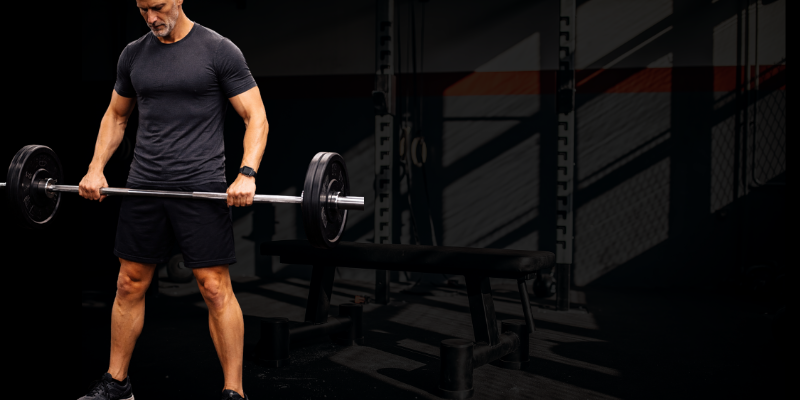
How to Restart Fat Loss After 40 (Correct Order)
Step 1: Rebuild the Muscle Signal
✅ Lift progressively
✅ Prioritize strength over exhaustion
✅ Train to stimulate, not annihilate
Step 2: Stabilize Hormonal Inputs
✅ Eat enough protein
✅ Avoid chronic calorie deficits
✅ Support sleep and circadian rhythm
Step 3: Train Stress Strategically
✅ Fewer junk workouts
✅ Fewer “go hard” days
✅ Higher-quality sessions
Step 4: Use Fat-Loss Phases — Not Permanent Dieting
Fat loss works best in cycles:
✅ Build
✅ Maintain
✅ Cut
✅ Recover
Permanent restriction kills momentum.

What Restarted Fat Loss After 40 Actually Feels Like
When signals are restored:
🔹 Appetite stabilizes
🔹 Strength improves
🔹 Energy returns
🔹 Fat loss resumes without force
This is sustainable fat loss — not survival dieting.
Key Differences: Old Strategy vs Signal-Based Strategy
| Old Approach | After-40 Signal Approach |
|---|---|
| More restriction | Muscle preservation + better recovery |
| More cardio | Progressive lifting + controlled conditioning |
| Chronic deficit | Phased fat loss with maintenance periods |
| Ignore recovery | Sleep + nervous system regulation as a fat-loss lever |
| Scale-only tracking | Strength + waist + trend lines (not daily noise) |
Clinical Evidence
Chronic calorie restriction lowers resting metabolic rate and increases fat-retention signaling, especially in adults over 40.
→ Adaptive Thermogenesis in Humans, Rosenbaum & Leibel, 2010, Obesity
Resistance training preserves fat-free mass and improves insulin sensitivity in middle-aged adults.
→ Effects of Resistance Training on Metabolic Health, Strasser et al., 2012, Sports Medicine
Sleep deprivation increases cortisol and reduces fat oxidation.
→ Sleep Loss and Hormonal Dysregulation, Spiegel et al., 2004, The Lancet
Ready to Restart Fat Loss After 40 — The Right Way?
If dieting stopped working, the answer isn’t more restriction. Learn how signal-based training, recovery, and metabolic support can help fat loss resume sustainably.
Restart Fat Loss After 40: Frequently Asked Questions
restart fat loss after 40, fat loss after 40, fat loss plateau after 40, metabolism after 40, hormones and fat loss