Cortisol balance after 40 becomes increasingly difficult to maintain as the body undergoes age-related changes in the nervous system, endocrine signaling, and metabolic pathways. These shifts make cortisol more reactive, more easily disrupted, and much slower to return to baseline. As a result, many adults begin noticing unexplained changes in sleep, energy, body composition, mood stability, stress tolerance, and recovery—even when their lifestyle has not significantly changed.
Cortisol is one of the most influential hormones in the body, affecting everything from blood sugar regulation to inflammation, thyroid function, and sex hormone production. When its rhythm becomes unstable, the ripple effects impact nearly every major physiological system.
The goal of this article is to provide a clear, clinical framework for understanding why cortisol balance after 40 becomes disrupted, how these hormonal shifts develop, and what testing, nutrition, lifestyle strategies, and targeted supplementation can help restore a more stable and resilient cortisol rhythm.
Cortisol Balance After 40: Why the Stress System Changes With Age
Cortisol Balance After 40 and the Physiological Shifts That Drive Dysregulation
Cortisol follows a predictable daily rhythm: high in the morning for alertness, gradually lowering throughout the day, then remaining low at night. After 40, several physiological changes alter that rhythm:
1. HPA-Axis Responsiveness Declines
The hypothalamus–pituitary–adrenal axis controls cortisol release. With age, the feedback loop between the brain and adrenal glands becomes less flexible, leading to:
🔹Higher or more frequent spikes
🔹Slower recovery after stress
🔹Larger swings between high and low cortisol
🔹More difficulty shutting down the stress response
🔹Even moderate stressors can create disproportionate physiological reactions.
Aging has been shown to flatten the normal cortisol rhythm, producing higher evening levels and reduced morning peaks compared to younger adults.
→ Study: Age-Related Changes in the Diurnal Rhythm of Plasma Cortisol
Minimal example (appropriate):
A moderate workload or a short night of sleep may trigger a stronger stress response than it would have at age 25, not because the situation is more stressful, but because stress-recovery capacity has changed.
2. Decreased Metabolic Flexibility
With age, the body becomes less efficient at regulating blood sugar. Cortisol is tightly linked to glucose control, so impaired metabolic flexibility increases cortisol reactivity, especially when:
🔹Meals are skipped
🔹Carbs are too low for individual needs
🔹Training is high intensity
🔹Caffeine is consumed on an empty stomach
These patterns contribute to energy instability, cravings, and the cortisol–insulin loop that influences abdominal fat storage.
3. Changes in Sleep Architecture
4. Increased Systemic Inflammation
Deep sleep naturally declines with age. Because cortisol should remain low at night, any sleep disruption can cause inappropriate cortisol elevations, contributing to:
🔹Difficulty falling asleep
🔹Middle-of-the-night awakenings
🔹Morning fatigue
🔹Reduced recovery capacity
Even when individuals sleep the same number of hours, the hormonal quality of that sleep may be different.
Research shows that even modest sleep restriction elevates nighttime cortisol and impairs glucose metabolism, worsening the stress–metabolic cycle common after 40.
→ Study: Effects of Sleep Restriction on Cortisol Levels and Metabolic Function
→ Read More About: Growth hormone after 40
Low-grade inflammation increases with age due to:
🔹Reduced antioxidant capacity
🔹Changes in immune function
🔹Environmental exposures
🔹Decreased recovery efficiency
Inflammation stimulates cortisol production, and persistent inflammation keeps cortisol elevated or erratic.
Chronic stress is known to activate metabolic and cardiovascular pathways that amplify cortisol output and increase long-term inflammatory burden.
→ Study: Chronic Stress and Its Effects on Metabolic and Cardiovascular Pathways
Key Symptoms of Cortisol Dysregulation After 40
Cortisol imbalance expresses differently depending on the pattern—high, low, or unstable.
High Cortisol Symptoms
🔹Elevated morning alertness that feels anxious or “wired”
🔹Difficulty winding down at night
🔹Frequent awakenings
🔹Tension or restlessness
🔹Elevated resting heart rate
🔹Persistent abdominal fat
Low Cortisol Symptoms
🔹Morning fatigue
🔹Sluggishness despite adequate sleep
🔹Reliance on caffeine
🔹Lower stress tolerance
🔹Reduced motivation or drive
Dysregulated Cortisol Curve (Most Common After 40)
Deep sleep naturally declines with age. Because cortisol should remain low at night, any sleep disruption can cause inappropriate cortisol elevations, contributing to:
🔹Difficulty falling asleep
🔹Middle-of-the-night awakenings
🔹Morning fatigue
🔹Reduced recovery capacity
Even when individuals sleep the same number of hours, the hormonal quality of that sleep may be different.
| Cortisol Pattern | Typical Presentation | Interpretation |
|---|---|---|
| Elevated Cortisol | Restless sleep, elevated tension, heightened alertness, abdominal fat storage | Stress response overactive or prolonged |
| Low Cortisol | Low morning energy, difficulty initiating activity, reduced resilience | Stress system under-responsive or fatigued |
| Dysregulated Curve | Variable energy, shifting sleep patterns, inconsistent appetite | Common after 40 due to metabolic, sleep, and recovery factors |
The Cortisol–Thyroid–Testosterone Interaction After 40
Cortisol influences nearly every major hormone system. When cortisol becomes dysregulated, downstream effects appear in thyroid function, sex hormones, insulin sensitivity, and growth hormone output.
1. Cortisol and Thyroid Function
Elevated or unstable cortisol interferes with:
🔹 T4 → T3 conversion
🔹 T3 receptor sensitivity
🔹 Cellular uptake of thyroid hormone
This can produce hypothyroid-like symptoms even when labs appear normal.
Glucocorticoids significantly suppress peripheral T4-to-T3 conversion, directly reducing active thyroid hormone availability at the cellular level.
→ Study: Differential Effects of Glucocorticoids on Thyroid Hormone Conversion
Reduced conversion of T4 to T3 may create sluggishness despite a normal TSH.
2. Cortisol and Testosterone
The relationship between cortisol and testosterone is reciprocal:
🔹 High or prolonged cortisol depresses testosterone production.
🔹 Low cortisol indicates poor stress resilience, which also reduces testosterone signaling.
Effects include:
🔹Reduced strength and recovery
🔹Lower motivation
🔹 Decreased libido
🔹 Mood instability
Elevated cortisol has been demonstrated to directly suppress testosterone production by inhibiting testicular steroidogenesis.
→ Study: Cortisol Suppression of Testosterone Secretion in Adult Men
3. Cortisol and Insulin: The Abdominal Fat Link
Cortisol elevates glucose. Repeated elevations contribute to:
🔹 higher insulin levels
🔹 reduced insulin sensitivity
🔹 preferential fat storage in the abdomen
This pattern is one of the primary reasons fat loss becomes more difficult after 40, even with consistent diet and exercise.
Minimal example:
A moderate caloric deficit may fail if insulin remains elevated due to cortisol-driven glucose release.
Nighttime Cortisol Elevation
The most characteristic sign of cortisol imbalance after 40 is nighttime cortisol elevation, which disrupts sleep through:
🔹Premature nighttime alertness
🔹 2–4 AM awakenings
🔹 Difficulty returning to sleep
This occurs when cortisol compensates for drops in blood sugar or reacts to accumulated stress.
Overtraining and Stress Stacking
Training intensity that was easily tolerated at age 25 may overwhelm the stress system at age 45 without proper recovery. Overtraining contributes to:
🔹 prolonged cortisol elevation
🔹 reduced growth hormone output
🔹 increased inflammation
🔹 compromised sleep
🔹 slower muscular recovery
Minimal example:
Two consecutive high-intensity training days may elevate nighttime cortisol in adults over 40 who previously tolerated that load without issue.
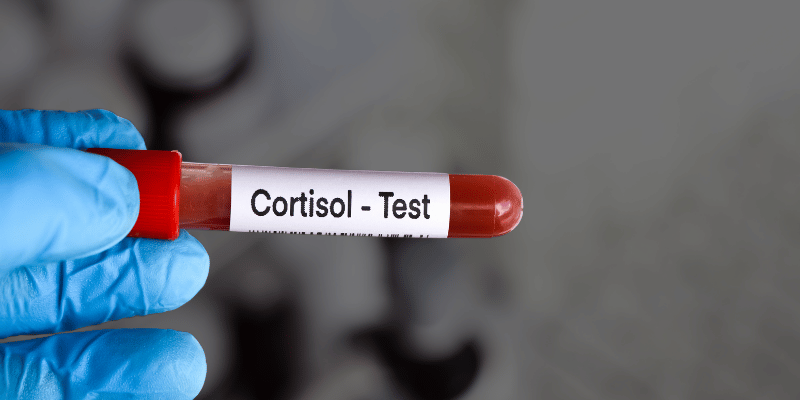
Cortisol Testing After 40
Testing must align with the pattern being assessed.
1. Blood Cortisol
🔹 Useful for high or low extremes but limited for circadian evaluation.
2. Salivary Cortisol (4-Point Curve)
Assesses:
🔹 Morning peak
🔹 MNidday trend
🔹 Afternoon decline
🔹 Nighttime suppression
This provides insight into stress adaptation and sleep disruption.
3. DUTCH Test
Gold standard for a full cortisol profile.
Measures:
🔹Free cortisol
🔹 Metabolized cortisol
🔹 Circadian rhythm
🔹 DHEA
🔹 Cortisol clearance
🔹Estrogen and androgen metabolites (contextually relevant)

Nutrition Strategies for Cortisol Balance After 40
Nutrition is one of the most effective levers for restoring cortisol balance after 40. As the body ages, blood sugar regulation becomes less stable, insulin sensitivity declines, and the stress response becomes more reactive. Because cortisol is tightly interconnected with glucose control, nutritional patterns strongly influence cortisol rhythm, sleep quality, energy stability, and abdominal fat distribution.
The goal of cortisol-supportive nutrition is to create predictable glucose availability, reduce unnecessary cortisol output, and ensure adequate nutritional resources for hormonal signaling and tissue recovery.
1. Prioritizing Protein Intake Across the Day
Adequate protein intake helps:
🔹 Stabilize post-meal blood sugar
🔹 Reduce cortisol-driven hunger fluctuations
🔹 Support neurotransmitter production
🔹 Improve satiety and energy consistency
🔹 Promote recovery from training
Protein also helps offset the natural decline in anabolic signaling that occurs after 40. Most adults underconsume protein, which contributes to fatigue and increased cortisol reactivity.
Recommended targets:
🔹 Women over 40: 100–130 g/day
🔹 Men over 40: 140–180 g/day
2. Meal Frequency and Cortisol Stability
Long gaps between meals can produce glucose dips, triggering cortisol release to restore blood sugar. While some individuals tolerate intermittent fasting, many adults over 40 experience:
🔹 Afternoon energy decline
🔹Irritability
🔹 Difficulty concentrating
🔹 Sleep disruption when fasting too long
For cortisol balance, most adults benefit from eating every 3–4 hours with balanced macronutrients.
3. Strategic Carbohydrate Timing
Carbohydrates influence cortisol dynamics in predictable ways.
When carbs help lower cortisol:
✅ Post-training
✅ With the evening meal
✅ Following high-stress days
✅ When experiencing frequent nighttime awakenings
Optimal carbohydrate sources:
🔹 Sweet potato
🔹 Basmati or jasmine rice
🔹 Oats (if tolerated)
🔹 Berries
🔹 Squash
🔹 Apples
🔹 Quinoa
4. The Cortisol-Friendly Plate Method
A simple approach for adults over 40:
🔹 ½ plate: vegetables or low-glycemic carbohydrates
🔹 ¼ plate: protein
🔹 ¼ plate: whole-food carbohydrates or healthy fats
5. Hydration and Electrolytes
Electrolyte balance influences adrenal signaling and morning cortisol stability. Low sodium is common in high-stress adults, especially those consuming caffeine early.
Sodium helps:
🔹 Support morning energy
🔹 Maintain stable blood pressure
🔹 Reduce stress-induced dizziness or fatigue
Supplementation Strategies for Cortisol Balance
Supplementation can support:
🔹 Sleep quality
🔹 Inflammation reduction
🔹 Nervous-system recovery
🔹 Metabolic regulation
Foundational Supplements
| Supplement | Primary Benefit | Best Timing |
|---|---|---|
| Magnesium Glycinate | Improves sleep quality, reduces nighttime cortisol, supports nervous-system recovery | Evening |
| Omega-3 Fatty Acids (EPA/DHA) | Reduces inflammation, supports stress adaptation, improves metabolic signaling | With meals (AM or PM) |
| Vitamin D3 + K2 | Supports hormone regulation, mood, immune function, and overall endocrine balance | Morning |
| Electrolytes / Sea Salt | Stabilizes morning cortisol, supports hydration, reduces fatigue from stress load | Morning or pre-workout |
Targeted Supplements
These supplements are chosen based on the individual’s cortisol pattern: elevated, low, or unstable.
| Supplement | When to Use | Best Timing |
|---|---|---|
| Ashwagandha (KSM-66) | Helps reduce elevated cortisol, tension, and difficulty winding down | Evening |
| Rhodiola Rosea | Supports low cortisol, fatigue, burnout, reduced morning energy | Morning |
| Phosphatidylserine (PS) | Reduces nighttime cortisol spikes, improves sleep continuity | Evening |
| L-Theanine | Calms the nervous system, reduces stress reactivity | Anytime |
Peptide Support for Cortisol Regulation
Peptides may support cortisol indirectly by enhancing sleep depth, autonomic recovery, and tissue repair. Read more on peptides for men and women over 40
| Peptide | Primary Benefit | Best Timing |
|---|---|---|
| DSIP | Enhances deep restorative sleep and reduces nighttime cortisol elevation | Evening |
| CJC-1295 + Ipamorelin | Supports GH release, tissue repair, and stress-system recovery | Evening or pre-sleep |
| Selank / Semax-Type Peptides | Improves stress resilience, enhances cognitive stability, reduces anxiety | Morning or early afternoon |

Ready to Rebuild Your Energy & Resilience?
Discover how hormone balance, peptides, and cortisol optimization can restore your energy, sleep, and fat-loss potential after 40. Your next chapter starts now.
Conclusion
Cortisol balance after 40 is not simply a matter of reducing stress but restoring a system that has become more reactive, less flexible, and more affected by metabolic and sleep-related shifts. Because cortisol influences thyroid conversion, testosterone signaling, insulin sensitivity, and inflammatory pathways, improving cortisol balance has system-wide benefits.
Through strategic nutrition timing, targeted supplementation, appropriate training volume, and consistent sleep routines, adults can re-establish a more stable cortisol rhythm and significantly improve energy, recovery, and fat-loss potential.
Key Takeaway
Cortisol imbalance is often the underlying factor behind stalled fat loss, poor sleep, afternoon crashes, and hormonal resistance after 40. Correcting cortisol is not a quick fix—but with the right framework, the stress system can be recalibrated, restoring metabolic stability, hormonal resilience, and overall vitality.
→ If you want the full systems map that shows how sleep, insulin, cortisol, inflammation, mitochondria, and hormones interact, start here: Hormones and metabolism after 40.
Cortisol FAQs After 40
cortisol balance after 40, cortisol rhythm, adrenal function, HPA-axis dysregulation, nighttime cortisol spikes, stress hormone imbalance, metabolic stress, hormone optimization over 40